Postcard from New Hampshire: The digital translation problem

WELCOME TO THE FREE MONTHLY EDITION of Digital Politics. I'm Mark Scott, and I have a confession: I have World Cup fever. And despite England's poor performances against Ghana and Panama, I can't help but whisper: It's coming home.
Happy early July 4th to all US readers.
— Regulators and companies are speaking past each other when it comes to the litany of new digital regulatory challenges that lie ahead.
— Europe has drunk the kool-aid on tech sovereignty. It risks putting its ambitions over the practicalities of implementing those proposals.
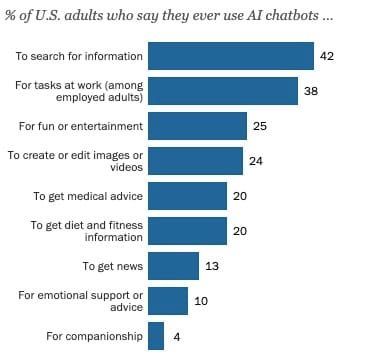
— Four out of every 10 Americans now use AI chatbots at work.
Let's get started:
YOU SAY ENFORCEMENT, I SAY COMPLIANCE
REGULATORS ARE FROM MARS, COMPANIES are from Venus. That's definitely how it felt after spending time with both groups in Portsmouth, New Hampshire last week at the annual Navigate digital policy conference. The three-day gathering — co-hosted by Harvard University's Berkman Klein Center for Internet & Society and the IAPP, an industry-focused non-profit — brought together policymakers, lawmakers and industry types from mostly Western countries to speak plainly about the current state-of-play on everything from cross-border data flows to platform governance enforcement.
That, and a fair share of lobster rolls.
While the event was held under the Chatham House Rule, it quickly became clear that those regulators and company executives present had radically different perspectives on what "good" looked like when complying with the growing list of national and regional rules related to artificial intelligence, data protection, digital competition and online safety. This divide — in which both sides fail to understand where the other is coming from — is a stark reminder that for digital legislation to truly take hold, more time needs to be spent on implementing the rules, and not just passing them.
In one conversation with a Western regulator, the official raised frustration that companies under his remit didn't take the time to make themselves known to his agency. From his perspective, the door was always open to company executives looking to build up a good rapport with a newly-empowered agency eager and willing to understand the problems that firms were facing. Better to make that investment from the get-go, he added, than come asking for advice/help when things inevitably went wrong. The regulator said his goal wasn't doling out the largest fines. Instead, it was about ensuring firms were compliant with what, he admitted, were complex rules.
So far, so good.
And yet, over lunch just a few hours later, I sat next to someone from a large tech company whose services fall directly under the remit of the regulator mentioned above. Great, I thought. Time to confirm what the official said: that regulatory compliance was proceeding, as envisioned, built on mutual trust and communication.
Here's what paid subscribers read in June:
— In Digital Politics' first 100 editions, I made a lot of claims. Some were right, some less so. Here's how I did over the last two years. More here.
— How Western countries' AI plans are not keeping up with industry; Lessons from Australia's social media ban for kids; Where future data centers are likely to be built. More here.
— How the G7 summit shows the digital divide between the US and everyone else; Why digital competition rules are already overseeing AI; SpaceX's IPO versus X's DSA fine. More here.
— If social media bans for kids are coming, this is how they should work; How one of Europe's top courts just blew up platform liability protections; How digital industries are driving economic growth for the next decade. More here.
Not so fast. The company executive made clear that his local colleagues had received a much different perspective when they had tried to engage with the regulator's case team. Those officials' failure to return emails, provide clear guidance and demonstrate a willingness to cooperate to determine what "good" looked like had become a daily frustration. "I don't think that regulator understands what's going on within his agency," the individual commented after I explained how the official had explained his regulatory ethos to me.
This pattern repeated during the conference. Regulators — and, to a lesser extent, legislators who were present — outlined the complex structural implementation plans designed to support each country's newly-minted digital rulebooks. There were cross-agency task forces. There were lengthy public consultations to co-develop codes of practice. There were open-door policies to help companies navigate the intricacies of data protection, AI and competition rulebooks that often overlapped in unclear ways.
"We want companies to come to us before there's a problem," said another regulator. "We're not going to bite."
That contrasted with high levels of frustration from company executives attending the New Hampshire conference. Many of these individuals skewed toward larger, multinational firms. Their presence at what was essentially an informal digital policymaking gathering for regulators, industry types and civil society also indicated they were more likely to be engaged in these conversations than the average corporate type.
Yet, conversation after conversation revealed the structural asymmetry currently at play in how companies comply with the growing list of national and regional digital rules. One compliance-focused executive told me her global team kept an ever-growing excel spreadsheet of the legislative proposals that may eventually become law. In 2023, the list was around 30 (excluding US state legislation.) This year, the number had grown to more than 200 — and covered traditional staples like the European Union and United States, as well as more far-flung locations like Brazil and Indonesia.
"I don't need sympathy for having to deal with this complexity," the individual conceded. "It's just that for most regulators, they have to deal with one, maybe two, sets of rules. I'm dealing with at least 15."
In truth, the first half of that quote is doing a lot of heavy-lifting. At a time of sky-rocketing profits (at least for the world's largest tech companies), it's hard to have sympathy for companies' needs to comply with the global cavalcade of digital regulation. That is just the state of play in 2026.
But what I do have time for is the questioning of the effectiveness of so many different pieces of legislation — and across multiple digital policymaking topics — that are coming into force at a speed that even regulators and lawmakers admitted in New Hampshire was a lot to handle. That's especially true when many national efforts across different agencies and legislative agendas were not joined up, leaving companies to often comply with potential contradictory regulatory guidance.
This digital translation problem — in which regulators and companies speak past each other — is a worry. Effective oversight should not be viewed solely via the prism of blockbuster fines. Instead, it's the day-to-day wonkery of mundane compliance meetings, requests for information and annual submissions that is the bread and butter of good digital regulation.
Both regulators and (most) companies want that. But what the New Hampshire conference demonstrated was a fundamental gap between regulatory intent and corporate experience in complying with digital rules.
Yes, there is a communication failure in terms of how both sides approach these issues. But, more importantly, there is a structural mismatch — one that shows no signs of resolving — that will determine whether the current generation of digital legislation actually changes corporate behavior or simply generates compliance paperwork without fundamentally improving people's online experiences.
Chart of the week
IF YOU HAVE BECOME ADDICTED TO EITHER Chat-GPT or Claude to give yourself quick answers to complex problems, don't worry. You're not alone.
More than 40 percent of Americans polled by the Pew Research Center now use these AI chatbots to search for information on a regular basis. That's a worrying sign for Google whose own service, Gemini, is now outdone by Chat-GPT when it comes to such AI-powered search.
There's a growing number of US states passing AI chatbot legislation, in part to ward off harm to kids. But among adults, only four percent of those surveyed used these tools for "companionship."
THE FINE LINE BETWEEN TECH SOVEREIGNTY AND PROTECTIONISM
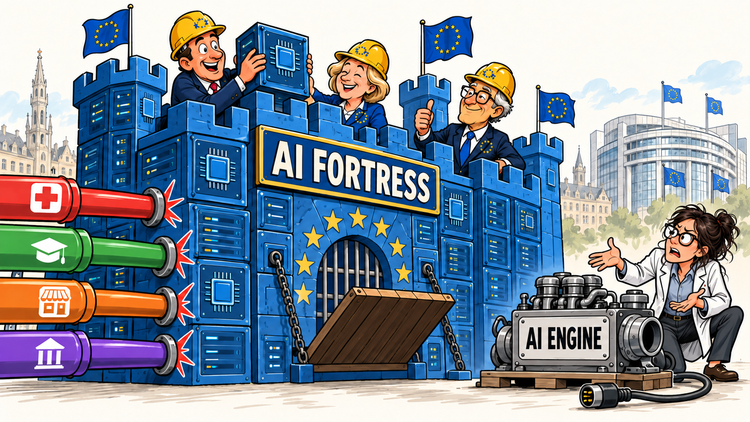
IN BRUSSELS AND OTHER EU CAPITALS, an awkward balancing act is underway. In the era of AI hype in which we currently live, policymakers are desperate to Make Europe Great Again via industrial policies that jumpstart AI-enabled growth. That often includes earmarking billions of euros in public funds for digital public infrastructure like data centers and even semiconductor facilities. The goal: to onshore technologies expected to dominate the economic agenda for the next decade.
Such policies are not much different to those promoted by the likes of Canada and Singapore. Sure, the 27-country bloc's economy is exponentially bigger than those so-called Middle Powers. But the combination of public investment, onshoring of critical technologies and the promotion of "tech sovereignty" has now become one of the critical digital policymaking trends for 2026.
But where the EU stands apart from others is the internal divide on what to do with its most important economic and diplomatic partner: the US.
To say that the winds have shifted against Washington would be an understatement. Donald Trump's administration has made its position toward Europe blatantly clear. Europe, too, has hardened its stance toward the US in the wake of the Greenland crisis, which — if you had forgotten — happened less than six months ago.
That stand-off, in which a NATO ally threatened to take over part of another NATO country's territory, led to a significant mind-shift for the US' staunchest allies in the bloc. It also reinvigorated a primarily French-led agenda to cut US tech firms off from parts of the European economy. That also included a renewed attempt to use the EU countries' national procurement rules and other industrial policy levers to back the creation of European champions amid the rush for technological sovereignty.
Yet with so much of European digital policymaking, things are never that easy. While there has been a growing call to pull the plug on American Big Tech giants — with the misguided specter of a "kill switch" repeatedly doing the rounds — many in Brussels are also aware of how unrealistic those ambitions currently are.
Let's leave aside the politics of the transatlantic relationship. Almost everyone understands they are in bad shape. But EU officials (especially those within the European Commission) have crunched the numbers and come to the conclusion that the bloc can't simply pull the plug on US tech overnight. There are too many dependencies, too much investment required and too little technical know-how across Europe to conduct a 'rip-and-replace' strategy promoted by Paris and its allies.
This realism was baked into the European Tech Sovereignty package announced earlier this month. Yes, there was the now must-have language about boosting EU economic output, onshoring critical technologies and urging member countries to determine which parts of their infrastructure needed to be "fully sovereign." But the proposals also didn't mention the need to pull back completely from long-standing allies — even if some of the plans certainly nudged the EU away from US tech.
Such pragmatism, in which EU officials acknowledge the inability to pull away from America, even while popular demand for such an approach grows, has left the bloc in a weakened position.
It would be one thing if Europe had gone "full protectionist" by blocking non-EU firms from bidding for lucrative government contracts and imposing export controls on critical technologies. Yes, before you ask, the EU does have some of those.
But policymakers have been insistent that Europe doesn't want to go down the protectionist route. This is about "right-sizing" the current relationship with the US, they tell me. Europe is open for business. But it also wants to build things more at home (via domestic companies) than rely on technologies from partners no longer seen as 100 percent trustworthy.
That nuance may play well in the corridors of the Berlaymont Building. But as an industrial policy, it leaves much to be desired.
By attempting a "cake and eat it, too" policy of both promoting European tech solutions while also telling the world you're open for business, the EU may fail to keep pace with the US and China. Both are pursuing more binary digital policy options. I'm not saying that's a certainty. But the complexities of Europe's tech sovereignty pitch — borne from the different political objectives of its 27 member countries — appears to be too slow, too nuanced and too unwieldy to compete on the global stage.
I don't think this approach was done on purpose. Instead, EU policymakers are attempting to balance the demands from the 'rip-and-replace" brigade (led by France) and the market liberals (led by the so-called D9+ countries). It's also trying to navigate a transatlantic relationship with a White House administration whose own policy objectives can blow hot and cold, often within weeks.
It's not an easy balance. Many within the Brussels bubble would prefer a scorched-earth policy of an immediate pull-back from relations with Washington and US tech firms, many of which have sided with the White House on tech-related foreign policy topics. The EU should be given credit for not giving into such rhetoric — and recognizing that such policies would not be practical over the short-term.
But in trying to straddle the divide between the bloc's tech sovereignty ambitions, Brussels has fallen into a long-standing trap. It laid out sophisticated policy objectives, only for those proposals to potentially fail to meet the geopolitical reality — and binary tech sovereignty alternatives — promoted by China and the US.
What I'm reading
— The European Commission informed Microsoft and Amazon that their cloud computing services were likely to be so-called "gatekeepers" under the EU's antitrust rules. More here.
— The German government's independent commission on online child safety published 56 recommendations on how to keep kids better protected online. More here.
— The British government outlined five different scenarios for how artificial intelligence could develop between now and 2030. More here.
— Columbia University's Institute of Global Politics explains how so-called "AI slop" is infiltrating the online information ecosystem. More here.
— The Royal United Services Institute makes the case for why access to the latest AI models is increasingly viewed via the lens of national security. More here.



Member discussion